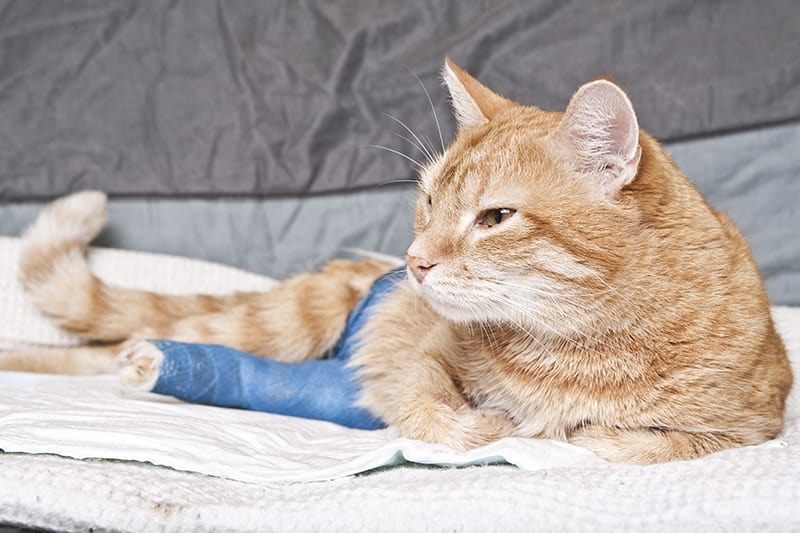
One moment your cat is walking normally, and the next she is crying out in pain and dragging her back legs behind her, unable to stand. There was no fall, no accident, nothing you saw happen. This sudden, frightening presentation has a specific and well-understood cause, and understanding why cats suddenly lose use of their back legs can help you recognize it fast enough to get her the emergency care she needs.
This guide covers what feline aortic thromboembolism is and why it happens, the signs to watch for, how it is diagnosed and treated, and why this particular emergency leaves no room for a wait-and-see approach.
Why Cats Suddenly Lose Use of Their Back Legs
The most common reason a cat suddenly loses use of her back legs, with no history of trauma, is a blood clot cutting off circulation to the hind limbs. Veterinarians call this feline aortic thromboembolism, though it is often known by its more descriptive nickname, saddle thrombus, because the clot typically lodges at the point where the aorta splits into two branches, an area shaped roughly like a saddle. This is one of the conditions covered under North MS Pet Emergency’s neurological and mobility issues services, since the paralysis it causes can look, at first glance, like a spinal or neurological problem rather than a circulation one.
What Is Feline Aortic Thromboembolism?
Feline aortic thromboembolism happens when a blood clot forms elsewhere in the body, usually inside the heart, breaks loose, and travels through the bloodstream until it lodges in a narrower blood vessel. In cats, that narrowing point is most often the aortic saddle, where blood flow to both back legs is supplied.
Less commonly, a clot can lodge in a single front leg or affect just one hind limb rather than both. The underlying cause and urgency are the same regardless of which limb or limbs are affected.
What Causes Feline Aortic Thromboembolism?
Almost every case of saddle thrombus in cats traces back to underlying heart disease, even in cats who seemed perfectly healthy beforehand.
Underlying Heart Disease
The most common underlying cause is hypertrophic cardiomyopathy, a disease in which the walls of the heart’s main pumping chamber thicken over time. This condition is covered in more detail as part of North MS Pet Emergency’s cardiac and blood disorders services. Some of the same subtle warning signs described in hidden symptoms of heart disease in cats, such as occasional rapid breathing or reduced activity, can precede a clot event by weeks or months.
Enlarged Heart Chambers
As the heart muscle thickens, the upper chambers, particularly the left atrium, can stretch and enlarge trying to compensate. Blood moving through an enlarged, poorly contracting chamber tends to flow more sluggishly, creating conditions where it is more likely to form clots.
Blood Clot Formation Inside the Heart
Once blood flow slows enough inside an enlarged heart chamber, a clot can form directly on the chamber wall and sit quietly before a piece breaks free into general circulation.
The Clot Traveling to the Aortic Saddle
Once a clot breaks loose, it travels through the bloodstream until it reaches a vessel too narrow to pass through. The aortic saddle is the most common lodging point in cats, which is why the hind limbs specifically are almost always affected.
Undiagnosed Heart Disease
Because early heart disease in cats often causes no obvious symptoms, a saddle thrombus event is frequently the very first sign that anything was wrong. It is a similar pattern to what shows up in early warning signs of a pet heart attack, where the underlying cardiac problem is often invisible day to day until a sudden, dramatic event forces it into the open.
Signs of a Blood Clot in Cats
The signs of feline aortic thromboembolism tend to appear all at once rather than building gradually.
Sudden Pain and Vocalizing
Cats experiencing a saddle thrombus often cry out suddenly and loudly, reflecting how painful the loss of blood flow to the hind limbs is.
Cold Hind Limbs
Because blood flow to the back legs is blocked, the limbs themselves become noticeably cooler to the touch compared to the rest of the body.
Inability to Walk or Bear Weight
Cats typically cannot stand on their back legs at all during an acute episode, and may drag themselves using only their front legs.
Blue or Pale Paw Pads and Nail Beds
The paw pads and nail beds on the affected legs often turn pale, gray, or bluish, reflecting the lack of oxygenated blood reaching the tissue.
Rapid or Labored Breathing
Because the same underlying heart disease that caused the clot can also lead to fluid buildup in or around the lungs, many cats show breathing changes alongside the leg paralysis.
Collapse
In more severe cases, cats may become weak throughout the body and collapse, representing the most critical end of what this condition can look like.
Comparing Causes of Sudden Back-Leg Weakness in Cats
| Cause | Typical Onset | Key Distinguishing Sign |
| Saddle thrombus (FATE) | Sudden, within minutes, no trauma. | Cold hind limbs, pale or blue nail beds, crying out in pain. |
| Spinal injury or trauma | Sudden, following a fall or accident. | Clear history of trauma, limbs remain normal temperature. |
| Vestibular disease | Sudden, without trauma. | Head tilt and loss of balance rather than true paralysis; limbs stay warm. |
How Is Feline Aortic Thromboembolism Diagnosed?
Diagnosis often begins with what a veterinarian can find on physical exam alone. Cold hind limbs, pale or bluish nail beds, and an absent or very weak pulse in the back legs are strong initial indicators.
Confirming the underlying heart disease typically requires an echocardiogram, which can identify an enlarged heart chamber and sometimes even visualize a clot directly. A chest x-ray helps assess whether fluid has built up in or around the lungs. Bloodwork rounds out the diagnostic picture and helps guide medication choices during treatment.
Treatment for Feline Aortic Thromboembolism
Treatment focuses on several goals at once: controlling pain, managing the underlying heart disease, and reducing the risk of further clots forming.
Pain Management
This condition is intensely painful, and pain control is typically one of the very first priorities in treatment, started before other diagnostics are even finished.
Treating the Underlying Heart Disease
Since heart disease is almost always driving the clot formation, medications to manage heart function and reduce fluid buildup are a central part of treatment, alongside oxygen support if breathing is labored.
Medications to Reduce Further Clotting
Blood-thinning medications are typically started to reduce the chance of additional clots forming. These medications do not dissolve the existing clot but are intended to prevent new ones from developing.
Long-Term Outlook
The outlook after a saddle thrombus event varies considerably depending on how severely the limbs were affected and how the underlying heart disease responds to treatment. Some cats regain meaningful use of their back legs over days to weeks, while others retain lasting deficits. Because the underlying heart disease does not go away, ongoing cardiology follow-up and medication are usually part of life afterward, and the risk of another clot remains a real consideration even after recovery from the first episode.
When to Contact an Emergency Vet
There is no version of this condition that can be safely monitored at home. Any cat who suddenly cannot use her back legs, is crying out in pain, or has hind limbs that feel unusually cold needs emergency evaluation immediately. The impact of delayed emergency care is especially significant here, since blood flow restriction that continues for too long can cause permanent tissue damage.
If you also notice rapid or labored breathing alongside the leg paralysis, treat this as an even higher priority, since it often signals that heart failure is occurring at the same time as the clot.
Getting Cats to Care Quickly When Every Minute Counts
A cat who suddenly cannot use her back legs is experiencing one of the most painful and frightening emergencies in veterinary medicine, but recognizing what is happening quickly gives her the best chance at recovery. Understanding why cats suddenly lose use of their back legs before it ever happens is one of the most useful things a cat owner can know.
At North MS Pet Emergency, we function as an overnight and weekend emergency vet for cats and dogs across North Mississippi, Northwest Alabama and Southwest Tennessee. If your cat is showing any of the signs described in this guide, do not wait. Contact us immediately for emergency evaluation and care.
FAQs
Q: Why cats suddenly lose use of their back legs?
A: The most common reason is a blood clot, called a saddle thrombus, that lodges where the aorta splits to supply the hind legs and blocks blood flow to them. This almost always develops as a complication of underlying heart disease, even in cats who showed no previous symptoms.
Q: What is feline aortic thromboembolism?
A: Feline aortic thromboembolism is the medical term for a blood clot that forms in the heart, breaks loose, and lodges in a blood vessel elsewhere in the body, most often at the aortic saddle supplying the back legs.
Q: Can a cat recover from saddle thrombus in cats?
A: Some cats regain meaningful use of their back legs over days to weeks with prompt treatment, while others are left with lasting deficits. Recovery depends heavily on how quickly treatment begins.
Q: How can I tell a blood clot apart from a spinal injury?
A: A blood clot typically causes cold hind limbs and pale or bluish nail beds with no history of trauma, while a spinal injury usually follows a fall or accident and does not change limb temperature.
Q: Is heart disease always the cause of a blood clot in cats?
A: In the vast majority of cases, yes. The heart changes that lead to clot formation often develop silently, which is why an emergency vet for cats will typically recommend cardiac evaluation as soon as a cat is stable enough for it.
Recent Posts
-
 Why Cats Suddenly Lose Use of Their Back Legs From a Blood Clot
 -
 Why Are Lilies Poisonous to Cats and How Fast Symptoms Can Appear
 -
 What Are the Signs of Pyometra in Dogs and Why It Cannot Wait
 -
 How To Recognize Warning Signs In A Pet In Pregnancy
 -
 Why Some Pet Emergencies Require Overnight Pet Care And Monitoring