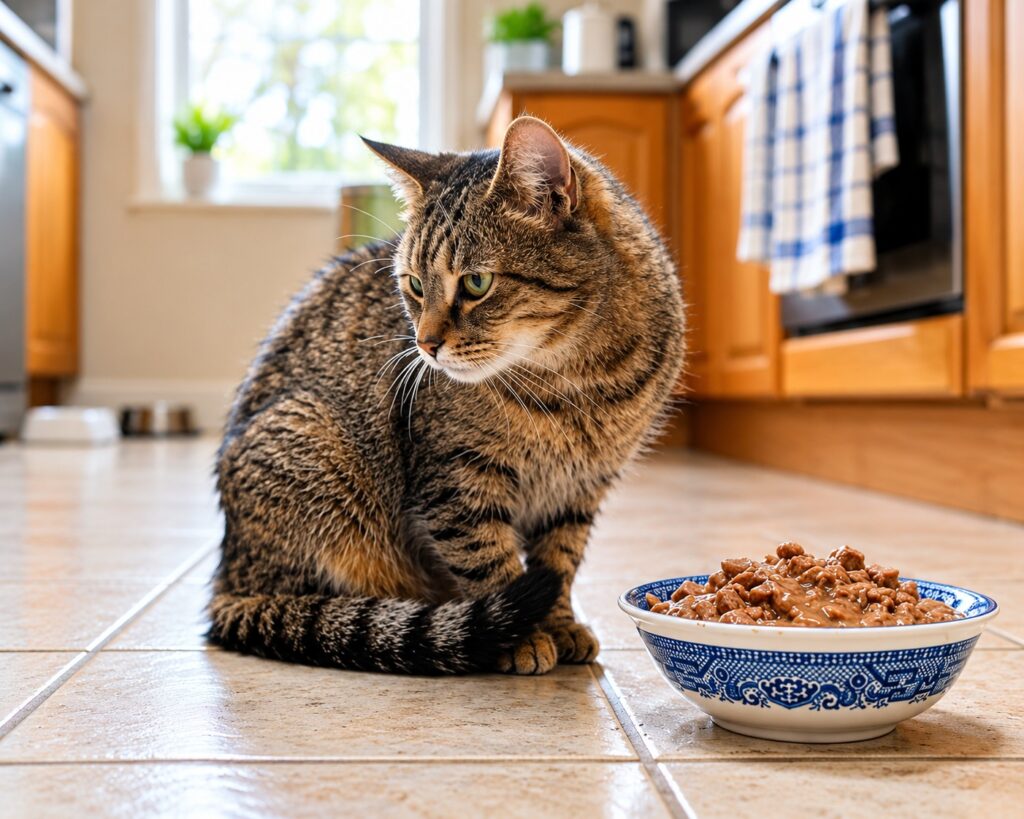
Why is my cat not eating? It is one of the most common questions owners ask, and it deserves a faster answer than most people expect. A cat that skips a meal may only be fussy, but a cat that keeps refusing food can be heading toward a serious liver condition.
This guide explains the common reasons cats stop eating, how fasting can lead to fatty liver disease, the signs of trouble, how veterinarians diagnose and treat it and when to call for help right away.
Why Is My Cat Not Eating?
Loss of appetite is not a diagnosis. The Cornell Feline Health Center calls anorexia a very broad clinical sign that can point to many different problems, and it says food refusal is never simply a cat choosing not to eat.
Medical Causes
The Cornell anorexia page lists diabetes, kidney disease, hepatic lipidosis, hyperthyroidism, pancreatitis, conjunctivitis, asthma and fever. Our guides to diabetes symptoms in cats and kidney failure in cats explain how appetite loss shows up in those conditions.
Dental, Digestive and Pain Problems
Cornell says dental pain is a common reason for refusing food, and digestive disease and other pain can do the same. A swallowed object can also stop a cat eating, and our guide to intestinal blockage in pets lists loss of appetite among its warning signs.
Stress and Change
Cornell lists disliking a new food, stress from a new animal in the home and grief after losing a companion, and it names hospitalization and boarding as common settings. The Merck Veterinary Manual adds household moves, accidental confinement, forced weight loss and unsuitable food changes as triggers.
How Fasting Can Lead to Fatty Liver Disease
Merck calls feline hepatic lipidosis the most common acquired and potentially fatal liver disease in cats. It usually follows an illness or event that stops a cat from eating, especially an overweight cat.
When a cat stops eating, fat is pulled from the body’s stores and sent to the liver. Cornell’s hepatic lipidosis page explains that the liver cannot process the excess, so triglycerides, a form of fat, build up inside liver cells and impair how the liver works. Merck describes the result as metabolic liver failure, and liver failure in cats can be fatal without prompt treatment.
Cornell says that in more than 90% of cases the condition is secondary to another problem, such as obesity, diabetes, cancer, hyperthyroidism, pancreatitis, kidney disease or another liver disease. Cornell notes that cats have a notable tendency to store fat in their liver cells. Cats of any age and any body condition can be affected, including ones that look healthy, although it is much more common in obese cats.
How Long Can a Cat Go Without Eating?
No number is safe to count on. Cornell’s anorexia page says a mature cat’s persistent lack of eating can seriously harm its health within as little as 24 hours, and that kittens under six weeks can be in danger after 12 hours without food. The University of Illinois College of Veterinary Medicine warns that a cat that goes a few days in a row without eating may develop hepatic lipidosis. Merck does not name a threshold.
Because the sources differ and every cat is different, do not wait to learn which number applies to yours. A cat that is not eating should be seen promptly.
Signs of Fatty Liver Disease in Cats
The early signs are easy to mistake for pickiness. Cornell’s hepatic lipidosis page lists reluctance to approach or eat from the food bowl, sometimes moving away and sitting while salivating, along with hiding and withdrawal. Later comes jaundice, a yellowish tinge to the ears and gums.
Illinois adds lethargy, weakness, vomiting and behavior changes. Merck lists weight loss of more than 25% of body weight, pallor and bleeding tendencies. It explains that the bleeding comes from vitamin K deficiency caused by impaired bile flow and not from the liver losing its ability to make clotting factors, which is one way liver failure in cats from this condition differs from other liver disease. If your cat is also vomiting, our post on severe vomiting and diarrhea in pets explains when that needs emergency care. Look at your cat’s gums and ears in good light, and report any yellow tint right away.
Comparing the Stages From Appetite Loss to Liver Trouble
The stages overlap, and a cat can move through them quickly. The details come from Cornell and Merck.
| Stage | What Is Happening in the Body | What You May Notice |
| Appetite loss begins | An illness, pain or stressor stops the cat from eating. | Refusing food, interest in the bowl that fades, hiding. |
| Fat moves to the liver | The body pulls fat from its stores faster than the liver can use it. | Weight loss, lethargy and withdrawal. |
| Liver injury | Fat builds up inside liver cells and bile flow is impaired. | Jaundice, vomiting, weakness and bleeding tendencies. |
How Is Fatty Liver Disease Diagnosed?
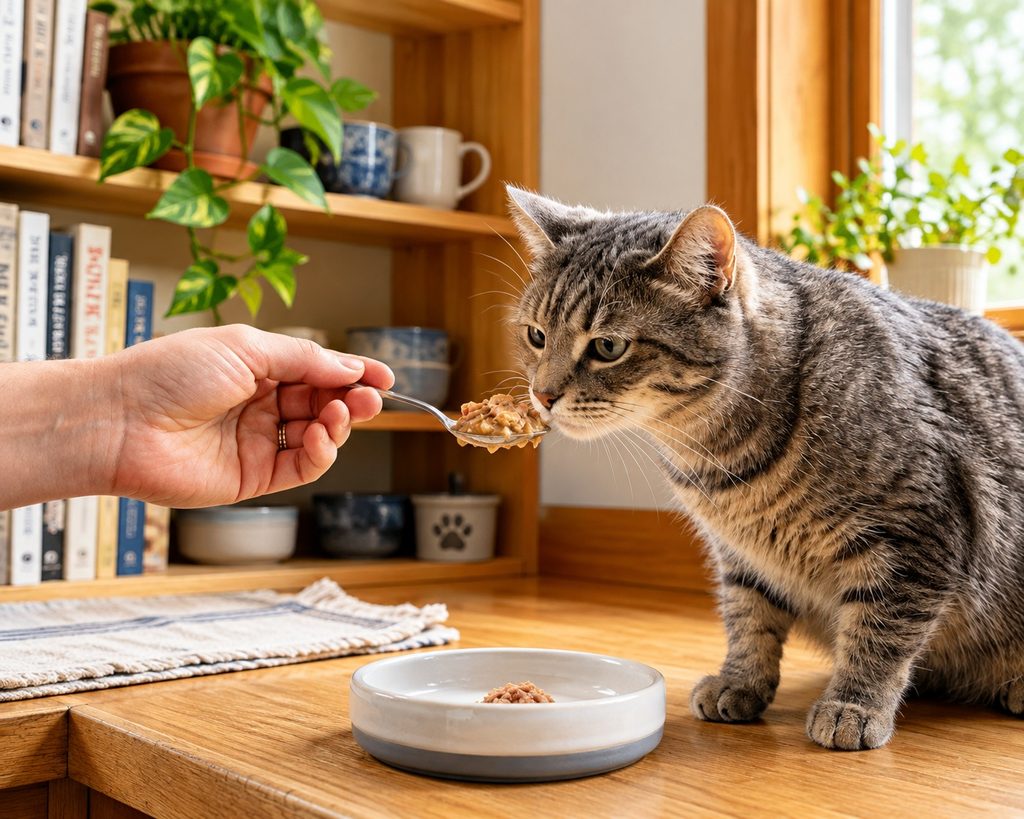
Cornell says a cat that is not eating needs a full workup, starting with a physical exam that checks weight, temperature, internal organs, heart and the teeth and gums, followed by lab work and imaging as needed.
For hepatic lipidosis, Merck describes bloodwork changes and an ultrasound that typically shows an enlarged liver. A small sample of liver cells taken with ultrasound guidance can confirm it. Merck adds that a full liver biopsy is not needed for diagnosis, though it may be needed when another disease is suspected, and that the whole abdomen should be checked for the underlying cause.
How Is Fatty Liver Disease Treated?
A veterinary team delivers all treatment, and nutrition is its center.
Nutrition and Fluids First
Merck calls nutritional support the cornerstone of recovery. Feeding starts after the team has corrected dehydration and electrolyte problems, because feeding too early can trigger a dangerous shift called refeeding syndrome. Merck says palatable, aromatic food is offered first, and if the cat rejects it the food is removed to avoid food aversion. If a cat still refuses food by mouth, a feeding tube delivers it directly. Cornell lists intravenous nutrients, vitamins and stomach tube feeding.
Do not try to force-feed at home. Cornell’s anorexia page says forcing food by hand is messy, ineffective and can worsen food aversion. Merck adds that appetite stimulants do not reliably restore eating in severe cases.
Treating the Cause
Cornell says promptly identifying and treating the underlying condition is part of care, because the liver problem usually follows something else.
What Recovery Looks Like
Cornell says hepatic lipidosis is likely fatal if not treated promptly, and that cats that survive an episode rarely relapse. Early-stage cats may go home within a few days, but owners usually continue tube feeding for about a month. Merck’s author reports about 75% to 80% survival in severely affected cats treated with customized critical care in her own hospital, compared with about 50% with nutritional support alone, so that figure reflects one hospital. Our post on why some pet emergencies require overnight monitoring explains why close watching matters.
When to Contact an Emergency Vet
Cornell says to contact a veterinarian right away when you notice any sign of anorexia and to follow the veterinarian’s feeding advice while the cause is investigated. Go immediately if a cat that is not eating also has vomiting, a yellow tint to the gums or ears, weakness, hiding, collapse or bleeding. Cats stop eating at night and on weekends too, and an emergency hospital works as animal urgent care when your regular clinic is closed.
Waiting makes the problem harder to treat, and our post on the impact of delayed emergency care explains why. If you are unsure which signs count, our list of pet emergency signs every owner should know can help.
Not every skipped meal is an emergency. A cat that missed one meal but is bright, active and eating again soon after can be a call to your regular vet. When appetite does not return, call.
Keeping a Cat Out of Fatty Liver Trouble
Illinois advises keeping cats lean, because extra body fat can overwhelm the liver’s ability to process fat. Merck lists forced weight loss and unsuitable food changes as triggers, so ask your veterinarian before changing a diet or starting a weight-loss plan, and mention any household stress. Merck notes that monitoring liver values in obese cats on weight-loss programs may detect early trouble.
Acting Fast When a Cat Stops Eating
So why is my cat not eating? The cause can be a tooth, a stressful move, a disease such as diabetes or kidney trouble, or something more urgent. Whatever it is, a cat that keeps refusing food can develop feline hepatic lipidosis, and the earlier a veterinarian sees it, the better the outlook tends to be. Pay attention to appetite, and call when it does not come back. Save the number of an animal urgent care you trust before you need it, because appetite problems rarely wait for office hours.
At North MS Pet Emergency, we function as an overnight and weekend emergency vet for cats and dogs across North Mississippi, Northwest Alabama and Southwest Tennessee. Our team cares for pets with vomiting and digestive emergencies. If your cat has stopped eating or is showing the signs in this guide, do not wait. Contact us immediately for emergency evaluation and care.
Sources
Merck Veterinary Manual, Feline Hepatic Lipidosis (2025). Professional veterinary reference published by Merck & Co., Inc. Supports the definition, triggers, signs, diagnosis, treatment approach, survival figure and prevention notes.
Cornell Feline Health Center, Anorexia (accessed 2026). University veterinary college. Supports the causes of appetite loss, the warning about 24 hours, the diagnostic workup and the caution against force feeding.
Cornell Feline Health Center, Hepatic Lipidosis (accessed 2026). University veterinary college. Supports the mechanism, risk, signs, treatment and outlook.
University of Illinois College of Veterinary Medicine, Hepatic Lipidosis: A Serious Problem When Cats Stop Eating (2023). University veterinary college. Supports the warning about days without eating, the signs and keeping cats lean.
FAQs
Q: Why is my cat not eating?
A: Loss of appetite is a broad sign. Cornell lists medical causes such as diabetes, kidney disease and pancreatitis, dental pain, digestive disease and stress. Because the cause is rarely obvious, a cat that keeps refusing food should see a veterinarian promptly.
Q: How long can a cat go without eating?
A: No safe number is established. Cornell says persistent lack of eating can seriously harm a mature cat within as little as 24 hours, and Illinois warns about a few days in a row. Call early instead of waiting.
Q: What is feline hepatic lipidosis?
A: It is fatty liver disease, in which fat builds up inside liver cells and impairs liver function. Merck says it is the most common acquired and potentially fatal liver disease in cats, and it usually follows an illness or event that stops a cat from eating.
Q: Can a cat recover from fatty liver disease?
A: Many do with prompt treatment. Cornell says it is likely fatal if not treated promptly, and that cats that survive rarely relapse. Early nutritional support and treatment of the underlying cause give the best outlook.
Q: Should I force-feed a cat that is not eating?
A: No. Cornell says force feeding by hand is messy, ineffective and can worsen food aversion. Call a veterinarian, who can arrange safe nutritional support.
Recent Posts
-
 Why Is My Cat Not Eating and How Fasting Can Lead to Fatty Liver Disease
-
 Can Dogs Get Hypothermia and Which Symptoms Mean It Is Time to Seek Care
-
 Why Do Cats Eat String and When a Swallowed Thread Becomes an Emergency
-
 What Does Xylitol Do to Dogs and Why It Becomes a Blood Sugar Emergency
-
 What Happens if a Dog Eats Ibuprofen and When It Becomes an Emergency