Spotting a torn gum wrapper next to your dog can set off one urgent question: what does xylitol do to dogs? A sweetener that people use without a second thought can push a dog’s blood sugar down within the hour and, in some cases, injure the liver over the next day or two.
This guide covers how xylitol affects a dog’s body, where it hides in the house, the signs to watch for, how emergency veterinarians diagnose and treat it, and when to call right away.
What Is Xylitol and Why Does It Matter for Dogs?
Xylitol is a sugar alcohol that food makers use as a sweetener. The U.S. Food and Drug Administration notes that it is slightly lower in calories than sugar and may appear on labels as birch sugar or wood sugar.
Dogs do not handle it the same way. The result is xylitol poisoning, a true emergency that can begin while your dog still seems fine. Two terms will come up often. Insulin is the hormone that moves sugar out of the blood and into the body’s cells. Hypoglycemia means low blood sugar.
What Does Xylitol Do to Dogs Inside the Body?
Xylitol affects a dog in two ways. The first is fast and involves blood sugar. The second is slower and involves the liver.
A Surge of Insulin and a Fall in Blood Sugar
In people, xylitol does not push the pancreas to release insulin. In dogs it does. The Merck Veterinary Manual describes a rapid insulin release in dogs that most other mammals do not show. Extra insulin pulls sugar out of the blood faster than the body can replace it.
The FDA says the drop can occur within 10 to 60 minutes of eating xylitol, and Merck says signs can develop within 30 minutes. Some products slow absorption, such as certain gums, and in those cases signs may be delayed by 12 to 18 hours. The FDA adds that serious effects may not appear for up to 12 to 24 hours. A dog that looks normal an hour after eating gum has not necessarily escaped.
Possible Injury to the Liver
Some dogs also develop liver injury. Merck says the exact mechanism is unclear and that signs may not appear until 24 to 48 hours after ingestion, although liver enzyme increases are often detectable within 4 to 12 hours. Cornell University’s College of Veterinary Medicine says even a small amount can cause severely low blood sugar, seizures or liver injury. That is why veterinarians treat xylitol as a serious cause of toxicity in dogs even when the first hours pass quietly.
The UC Davis School of Veterinary Medicine says xylitol poisoning has not been reported in cats or other domesticated mammals, and the FDA says cats do not seem as affected, though ferrets have developed low blood sugar and seizures. Dogs are the species to protect.
Where Xylitol Hides in Your Home
The products behind xylitol ingestion dogs experience at home are ordinary ones, and Cornell notes that xylitol content varies widely, even between flavors of the same brand. Reading labels is the only reliable check, and the ingredient to look for is xylitol, birch sugar or wood sugar.
Gum, Mints and Baked Goods
Gum and mints are the classic source. They live in handbags, backpacks, car cup holders and nightstand drawers, which are easy for a dog to reach. The FDA also lists baked goods and sugar-free desserts such as skinny ice cream.
Peanut Butter, Toothpaste and Medicine
Some peanut and nut butters contain xylitol, and owners use them to hide pills or fill chew toys, so read the label every time. Our guide to toxic foods for pets covers other kitchen hazards. The FDA says toothpaste, mouthwash, cough syrup and chewable vitamins can also contain xylitol, and Merck lists some over-the-counter medicines, supplements and sugar-free liquid medication bases. Use only toothpaste made for dogs.
Signs of Xylitol Poisoning in Dogs
Signs depend on the product, how much your dog ate and how long ago it happened.
Early Signs
The FDA lists vomiting first, followed by decreased activity as blood sugar drops. A dog that turns quiet or seems tired for no clear reason may already be in trouble if there was any chance of exposure.
Weakness, Stumbling and Tremors
As blood sugar falls, weakness and staggering follow. Merck lists ataxia, which means loss of coordination, and Cornell lists disorientation and tremors. Your dog may sway, stare or tremble while lying still.
Seizures and Collapse
Severe low blood sugar can cause seizures, collapse and, in the worst cases, coma, according to the FDA and Merck. A seizure after possible xylitol exposure means you should head to an emergency hospital and call ahead on the way.
Delayed Liver Trouble and Bleeding
Liver injury shows up later. UC Davis describes jaundice, a yellow tint to the gums, eyes or skin, and a low platelet count on bloodwork. Merck adds lethargy, vomiting and coagulopathy, which means the blood does not clot normally. Bruising, bleeding gums or blood in vomit or stool can result, and our guide to dog internal bleeding symptoms explains what hidden bleeding can look like.
Comparing the Stages of Xylitol Poisoning

The three stages below overlap, and timing comes from the sources listed at the end of this guide.
| Stage | What Is Happening in the Body | What You May Notice |
| First hour | Insulin surges and blood sugar falls, with signs reported from about 10 to 60 minutes. | Vomiting, tiredness, weakness and stumbling. |
| Delayed onset | Slow-absorbing products such as some gums can push low blood sugar back by 12 hours or more. | The same signs, starting much later than expected. |
| One to two days later | Liver injury may develop. Enzyme increases can show on bloodwork within hours. | Lethargy, vomiting, a yellow tint to the gums or eyes, and bleeding problems. |
How Is Xylitol Poisoning Diagnosed?
Cornell says no specific test detects xylitol, so diagnosis rests on exposure history, clinical signs and bloodwork. Emergency veterinarians start by asking what your dog ate and when. Bring the packaging if you can, because Cornell says it lets the team read the ingredients and estimate how much was eaten.
Next comes a physical exam, then a blood sugar check and liver enzyme tests.
How Is Xylitol Poisoning Treated?
Treatment depends on the product, the timing and how your dog looks, and a veterinary team always delivers it.
Early Decontamination and Blood Sugar Support
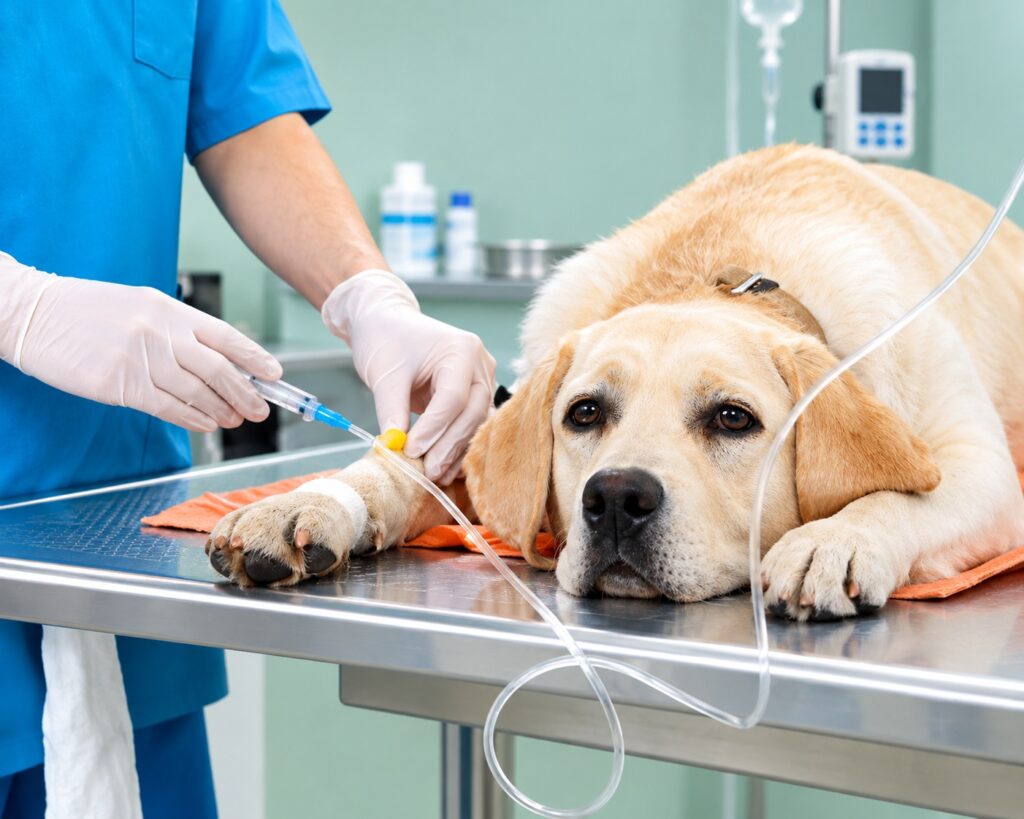
Veterinarians usually avoid inducing vomiting unless the ingestion was very recent, and UC Davis warns against it without veterinary supervision because low blood sugar can develop quickly. Do not try to make your dog vomit at home. Treatment for low blood sugar usually means sugar given through an IV, along with fluids and electrolytes, and Merck says it continues until blood sugar stays normal on its own, because low blood sugar can persist for 24 hours or more.
Liver Protection and Monitoring
Medications to protect the liver and stomach may be used, though Merck notes that how well the liver-protecting ones work is not yet known. Dogs are often hospitalized so the team can watch blood sugar and recheck liver values over the following days. Our post on why some pet emergencies require overnight monitoring explains how that works.
What Recovery Looks Like
Cornell says most dogs treated aggressively for low blood sugar recover well. Dogs with liver injury face a more guarded outlook. In one study the Merck manual cites, 62.5% of dogs with signs of liver injury died or were euthanized despite aggressive treatment.
When to Contact an Emergency Vet
Call an emergency vet right away if you know or suspect your dog ate anything with xylitol, or if you cannot find the label and cannot rule it out. Treat any suspected xylitol ingestion dogs might have had as an emergency until a veterinarian says otherwise. The FDA advises taking your dog to a vet or emergency animal hospital immediately.
Leave right away if you see vomiting, weakness, stumbling, tremors, a seizure, collapse, a yellow tint to the gums or any bleeding. Gum is often found late at night or on weekends, when your regular vet is closed, and an overnight and weekend emergency vet exists for that moment. Waiting makes an emergency harder to treat, and our post on the impact of delayed emergency care explains why.
Not every case is an emergency. If there was no exposure and you simply want help choosing safe treats, toothpaste or peanut butter, book a routine appointment.
Acting Fast When Xylitol Is Involved
So what does xylitol do to dogs? It can drop blood sugar within the hour, it can injure the liver over the days that follow, and it can do both to a dog that looked perfectly well at bedtime. Dogs treated promptly for low blood sugar tend to recover well, so the first phone call matters most. Check labels and keep gum and mints out of bags. Xylitol is one of several hidden causes of toxicity in dogs, and the label is your best early warning.
At North MS Pet Emergency, we function as an overnight and weekend emergency vet for cats and dogs across North Mississippi, Northwest Alabama and Southwest Tennessee. Our poisoning and toxicity service includes management of xylitol ingestion. If your dog has eaten anything that may contain xylitol, or is showing the signs in this guide, do not wait. Contact us immediately for emergency evaluation and care.
Sources
U.S. Food and Drug Administration, Paws Off Xylitol; It’s Dangerous for Dogs (2025). US government consumer update. Supports what xylitol is, the products that contain it, onset timing and the advice to go to a vet immediately.
Merck Veterinary Manual, Xylitol Toxicosis in Dogs (2025). Peer reviewed professional veterinary reference. Supports the mechanism, signs and timing, liver and clotting findings, treatment and the 62.5% liver figure, which the manual attributes to a single study.
UC Davis School of Veterinary Medicine, Xylitol Poisoning in Dogs (2021). University veterinary school. Supports the cat species note, the liver findings and the caution against inducing vomiting.
Cornell University College of Veterinary Medicine, Xylitol toxicities (accessed 2026). University veterinary college. Supports the small amount warning, diagnosis steps and the outlook for treated dogs.
FAQs
Q: What does xylitol do to dogs after they eat it?
A: Xylitol triggers a surge of insulin in dogs, which pulls blood sugar down and can cause vomiting, weakness, stumbling and seizures. Signs can start within an hour or be delayed for many hours depending on the product. Some dogs also develop liver injury one to two days later.
Q: Can a small amount of xylitol hurt my dog?
A: Cornell says even a small amount can cause severely low blood sugar, seizures or liver injury. Product content varies widely, so call an emergency vet and have the packaging ready.
Q: How long after eating xylitol do symptoms start?
A: The FDA says low blood sugar can occur within 10 to 60 minutes, while Merck says signs may be delayed by 12 to 18 hours with slow-absorbing products such as some gums. Liver signs may not appear until 24 to 48 hours, so do not wait for symptoms before calling.
Q: Can a dog recover from xylitol poisoning?
A: Many dogs do. Cornell says most dogs treated aggressively for low blood sugar recover well, though dogs with liver injury face a more guarded outlook. Fast treatment gives your dog the best chance.
Q: What should I do right now if my dog ate something with xylitol?
A: Call an emergency vet or go to an emergency animal hospital immediately, even if your dog looks fine. Bring the packaging so the team can read the ingredients. Do not try to make your dog vomit at home, because that decision belongs to the veterinary team.
Recent Posts
-
 What Does Xylitol Do to Dogs and Why It Becomes a Blood Sugar Emergency
 -
 What Happens if a Dog Eats Ibuprofen and When It Becomes an Emergency
 -
 Why Cats Suddenly Lose Use of Their Back Legs From a Blood Clot
 -
 Why Are Lilies Poisonous to Cats and How Fast Symptoms Can Appear
 -
 What Are the Signs of Pyometra in Dogs and Why It Cannot Wait