
You walk into the kitchen and find a torn wrapper on the floor, a brownie pan pushed off the counter, or a dog with chocolate on its muzzle and a guilty look. Your mind goes straight to one question: what happens if a dog eats chocolate, and how worried should you be right now? Chocolate is toxic to dogs and can be fatal in serious cases, and you are not alone in that panic.
The answer depends on the type of chocolate, the amount and your dog’s size, and signs often do not appear right away. This guide covers what chocolate does inside a dog’s body, which products are the most dangerous, the signs to watch for from mild to severe, how veterinarians diagnose and treat chocolate toxicity, and when to contact an emergency vet.
What Is Chocolate Toxicity in Dogs?
Chocolate toxicity in dogs is poisoning caused by stimulant compounds found in cacao, the plant that chocolate is made from. Theobromine is the main cause, according to the U.S. Food and Drug Administration, and caffeine adds to the effect. Both belong to a chemical family called methylxanthines, which stimulate the heart and the nervous system.
People break these compounds down quickly, but dogs break theobromine down slowly, so its effects last much longer. The Merck Veterinary Manual adds that some of it is passed back into the intestines and absorbed a second time, which stretches the poisoning out even further.
Risk depends on the type of chocolate, the amount eaten, the dog’s size and its sensitivity to theobromine. Pet Poison Helpline notes that small amounts usually cause only stomach upset, but an owner cannot reliably judge at home whether an exposure is small.
What Happens if a Dog Eats Chocolate?
Once chocolate is swallowed, theobromine and caffeine are absorbed through the digestive tract and act on several organ systems at once. They push the nervous system into overdrive, speed up the heart, increase urine production and make the heart and other muscles contract harder than they should.
The Heart and Nervous System
Tachycardia means a heart rate faster than normal, and arrhythmias, which are irregular heart rhythms, can follow. In the nervous system, a dog can develop ataxia, which means wobbling and loss of coordination, along with tremors, muscle rigidity and seizures. The Merck Veterinary Manual names heart rhythm problems, overheating and respiratory failure as the usual causes of death, which is why severe cases need hospital monitoring.
The Digestive Tract and Pancreas
Vomiting and diarrhea are common. Chocolate is also rich in fat, and the Merck Veterinary Manual notes that this fat can trigger pancreatitis in susceptible dogs. Pancreatitis is a painful inflammation of the pancreas, the organ that helps digest food, and it is a separate problem from the stimulant effects.
Why Signs Take Time to Appear
A dog can look normal after eating chocolate. The Merck Veterinary Manual states that signs usually appear 6 to 12 hours after ingestion, and the FDA notes they can begin within a few hours. In severe cases, signs can continue for up to 72 hours. A dog that seems fine an hour after raiding the pantry has not been cleared, and treatment that starts before signs appear lets a veterinary team remove chocolate from the stomach before it is absorbed.
What Causes Chocolate Toxicity in Dogs?
The Merck Veterinary Manual notes that methylxanthine content varies by brand, so no list is exact. A rough order from most to least concentrated still shows why some exposures worry a veterinarian more.
Baking Chocolate and Cocoa Powder
Unsweetened baking chocolate and cocoa powder sit at the top of the risk list because they hold the highest levels of methylxanthines. Dogs eating cocoa powder from a spilled bag, or chewing through baking squares, face a much larger exposure than a dog that eats a sweet candy bar of the same weight.
Dark, Semisweet, Milk and White Chocolate
Dark and semisweet chocolate come next. On a bar label, a higher cocoa percentage means more unsweetened chocolate and therefore more methylxanthines, so a very dark bar is a bigger concern than a lightly sweetened one. Milk chocolate contains less theobromine, but milder is not the same as safe, because a small dog can reach a dangerous exposure with far less than a large dog. White chocolate is a negligible source of methylxanthines, although its fat and sugar can still upset the stomach.
Brownies, Cookies and Holiday Baking
Brownies, cookies and cakes are hard to judge because the chocolate inside might be baking chocolate, cocoa powder or chips. One of the holiday hazards for pets is a cooling pan or unattended plate that a dog can reach in seconds, so share the recipe with the veterinary team if you know it.
Candy, Mulch and Hidden Ingredients
Some chocolate candy carries a second danger. Pet Poison Helpline lists xylitol as an ingredient of concern in certain chocolate products. Xylitol is a sugar substitute that can drop a dog’s blood sugar dangerously and injure the liver, as covered in the guide to xylitol poisoning in dogs. Chocolate-covered raisins add another problem, because raisins can damage a dog’s kidneys. Cocoa bean mulch can also be toxic, according to the Merck Veterinary Manual, although some products have had the methylxanthines removed. Read ingredient lists and take the package with you.
Signs of Chocolate Poisoning in Dogs
Signs usually move from mild to severe as theobromine builds up, and the sections below follow that order.
Vomiting and Diarrhea
These are often the first signs an owner notices, and they can start within a few hours. After a known chocolate exposure, treat them as the possible start of poisoning, not a stomach bug. Repeated vomiting and diarrhea in pets can also lead to dehydration.
Restlessness, Thirst and a Racing Heart
A dog that cannot settle, paces or seems wired is showing the stimulant effect. You can feel your dog’s heartbeat by placing a hand on the left side of the chest, just behind the front leg. A racing or uneven beat, or panting while resting in a cool room, is a warning sign, and you should call an emergency vet instead of counting beats.
Tremors, Stiffness and Seizures
Tremors are fine shaking that your dog cannot control. A dog may also stagger, stand stiffly or have muscle spasms, and a seizure means the nervous system is badly overstimulated. Keep your hands away from your dog’s mouth, move hard objects out of the way and head for emergency care. This guide on responding to a seizure in an emergency covers the moment itself.
Collapse, Overheating and Coma
Collapse, a very high body temperature, trouble breathing and a bluish tint to the gums, called cyanosis, are signs of a life-threatening situation. Call the emergency vet while someone else gets the car ready.
Abdominal Pain and Pancreatitis
Some dogs develop pancreatitis because of chocolate’s fat content. Typical signs include repeated vomiting, a hunched posture, belly pain and refusal to eat.
Comparing the Stages of Chocolate Toxicity
This table shows how a chocolate exposure can unfold. Real cases vary, so treat it as a general map.
| Stage | What Is Happening in the Body | What You May Notice |
| Early (first few hours) | Theobromine and caffeine are absorbed and begin to act. | Possible vomiting, diarrhea or restlessness. Some dogs look normal. |
| Usual onset (6 to 12 hours) | Heart and nervous system effects usually become obvious. | Racing heart, heavy panting, extra thirst and urination, tremors, wobbling. |
| Severe cases (up to 72 hours) | Dogs clear stimulants slowly. Heart rhythm, temperature and potassium can change. | Seizures, collapse, overheating, trouble breathing, ongoing weakness. |
| Fat-related problems (timing varies) | The fat in chocolate treats can inflame the pancreas in susceptible dogs. | Repeated vomiting, belly pain, hunched posture, poor appetite. |
How Is Chocolate Toxicity in Dogs Diagnosed?
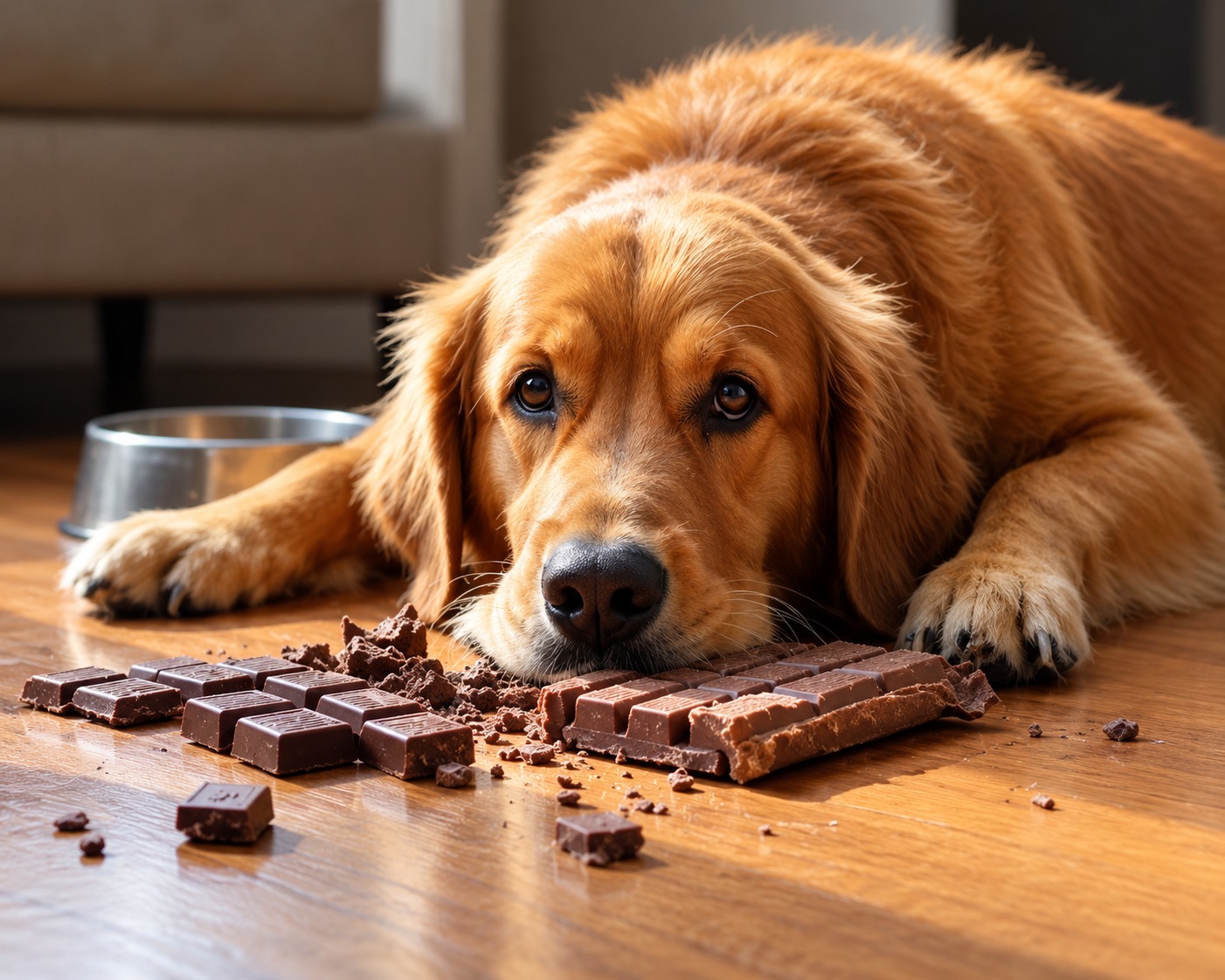
The Merck Veterinary Manual states that no readily accessible diagnostic test exists for chocolate poisoning, so diagnosis rests on what your dog ate and the signs it shows. Bring the packaging or a photo of it, and note the product, roughly how much is missing, when it happened and your dog’s weight.
A physical exam then checks heart rate and rhythm, temperature, breathing and hydration. Heart monitoring with an electrocardiogram, which records the heart’s electrical activity, is part of caring for a dog with signs, and bloodwork checks electrolytes such as potassium. An animal poison control center can estimate risk by phone but cannot examine your dog.
How Is Chocolate Toxicity in Dogs Treated?
Treatment depends on how long ago the chocolate was eaten and how the dog looks on arrival. The goals are to limit absorption and to support the heart and nervous system until the poison clears.
Removing Chocolate Before It Is Absorbed
When the exposure was recent and the dog is still acting normal, a veterinarian may induce vomiting with veterinary medications. The Merck Veterinary Manual describes this window as roughly the first 2 hours. Activated charcoal, which binds toxins in the gut, is reserved for potentially lethal exposures because it carries its own risks for hydration and electrolytes. Do not try to make your dog vomit at home, because vomiting at the wrong time, or in a dog that already has signs, can cause more harm.
Hospital Care for Dogs With Signs
Dogs with signs receive medication to stop vomiting, sedatives and anticonvulsants for tremors and seizures, and antiarrhythmics for abnormal heart rhythms. Intravenous fluids support hydration, help the body remove methylxanthines through urine and correct electrolyte imbalances, and they also address severe dehydration in a dog that has vomited repeatedly.
Because signs can last up to 72 hours in severe cases, some dogs need monitoring through the night and beyond. No guide can give honest odds for an individual dog, which is why early contact with a veterinary team matters so much.
When to Contact an Emergency Vet
Call right away if you know or suspect your dog ate baking chocolate, cocoa powder, dark chocolate or a large amount of any chocolate. Any small dog or puppy deserves an immediate call, as does a dog when you do not know what or how much was eaten. Go in without delay if your dog shows any sign described above.
A routine appointment is reasonable only for prevention questions or after a veterinarian has said a small exposure needs no treatment. Waiting for signs takes options away from a veterinary team, as the impact of delayed emergency care explains. Do not wait until morning.
North MS Pet Emergency serves as an emergency vet for dogs when most clinics are closed. The hospital is open Monday through Thursday from 5:30 PM to 7:00 AM, and from Friday at 5:30 PM through Monday at 7:00 AM. Walk-ins are accepted, and if you can, call 662-780-0580 on the way.
Acting Early When Chocolate Is Involved
Chocolate poisoning is serious, but early veterinary care gives a dog the best chance. A dog that looks fine at first may not stay that way, so call as soon as you know.
At North MS Pet Emergency, we function as an overnight and weekend emergency vet for cats and dogs across North Mississippi, Northwest Alabama and Southwest Tennessee. If your dog has eaten chocolate or is showing any of the signs in this guide, do not wait. Contact us immediately for emergency evaluation and care.
Sources
U.S. Food and Drug Administration, Leave Chocolate Out of Rover’s Celebrations (accessed 2026). Government agency. Supports these points: theobromine as the main toxin, slow breakdown in dogs, the factors that set risk, the timing of signs, and the statement that chocolate can kill dogs.
Merck Veterinary Manual, Chocolate Toxicosis in Animals (accessed 2026). Veterinary reference. Supports these points: how methylxanthines act on the heart and nervous system, the usual timing and duration of signs, causes of death, the lack of a diagnostic test, chocolate types and cocoa mulch, and the treatment approach.
Pet Poison Helpline, Chocolate and Caffeine Toxicity (accessed 2026). Poison control organization. Supports these points: small amounts usually cause only stomach upset, and xylitol is an ingredient of concern in some chocolate products.
FAQs
Q: What happens if a dog eats chocolate and seems fine?
A: A dog can look normal for hours after eating chocolate, and signs usually appear 6 to 12 hours after ingestion. Treatment that starts early can remove chocolate from the stomach before it is absorbed. Call an emergency vet as soon as you know chocolate was eaten, even if your dog seems fine, so the team has the most options.
Q: How long does chocolate toxicity last in dogs?
A: Dogs clear theobromine slowly, and part of it is recycled through the gut, so effects last much longer than in people. In severe cases, signs can continue for up to 72 hours. How long a particular dog is affected depends on the product, the amount and the dog’s size.
Q: Is milk chocolate dangerous for dogs?
A: Milk chocolate contains less theobromine than dark chocolate, baking chocolate or cocoa powder, but it can still poison a dog when enough is eaten. Small dogs reach a dangerous exposure with less chocolate than large dogs do. Only a veterinarian or poison control can weigh the product, the amount and your dog’s weight, so call before deciding it is safe.
Q: Can a dog die from eating chocolate?
A: Yes. The FDA states that chocolate is toxic to dogs and can kill them. Early care gives a dog more treatment options, and seizures, collapse or trouble breathing mean your dog needs emergency care immediately.
Q: When should I take my dog to an emergency vet after eating chocolate?
A: Call as soon as you know or suspect chocolate was eaten, particularly baking chocolate, cocoa powder, dark chocolate or a large amount of any kind. Go in right away if your dog vomits repeatedly, trembles, pants heavily, has a seizure or collapses. North MS Pet Emergency is an emergency vet for dogs open at night and on weekends.

Recent Posts
-
 What Happens if a Dog Eats Chocolate and How Poisoning Harms the Body
-
 Why Is My Cat Not Eating and How Fasting Can Lead to Fatty Liver Disease
-
 Can Dogs Get Hypothermia and Which Symptoms Mean It Is Time to Seek Care
-
 Why Do Cats Eat String and When a Swallowed Thread Becomes an Emergency
-
 What Does Xylitol Do to Dogs and Why It Becomes a Blood Sugar Emergency